

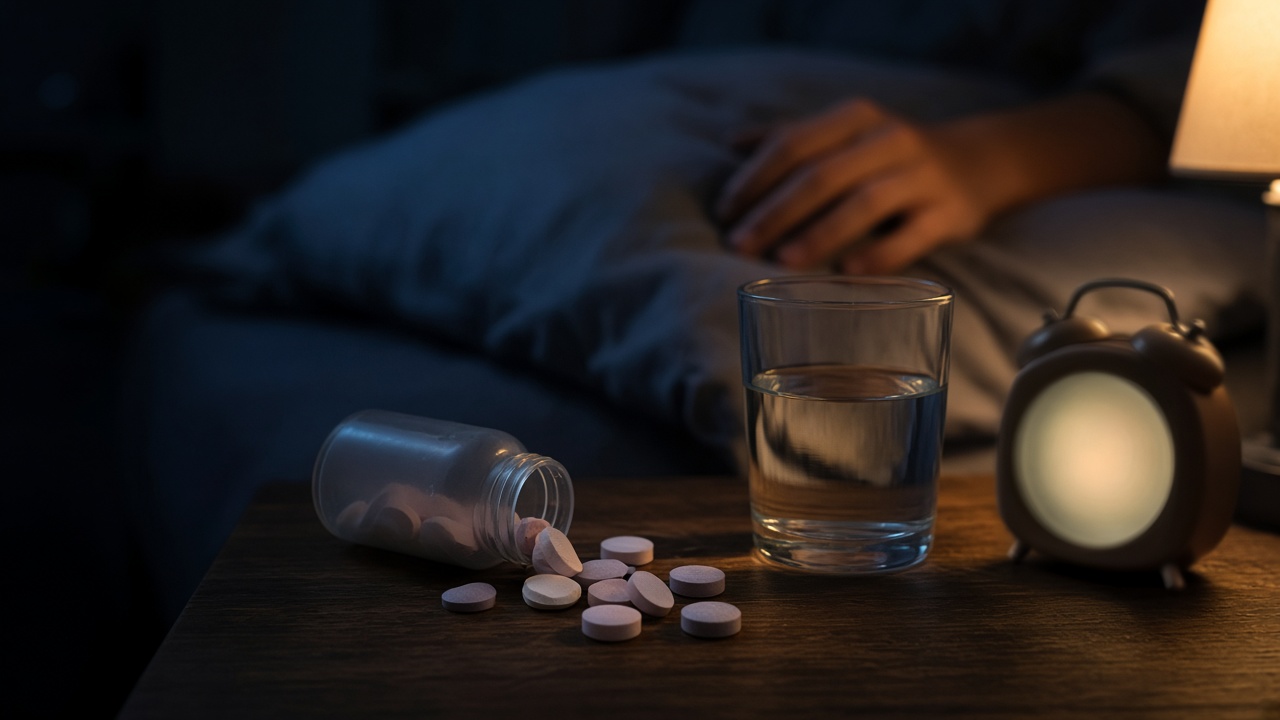
Key takeaway: Melatonin is a timing signal for your body clock, not a sedative, and the gummies sold as sleep aids are rarely dosed with either fact in mind. In a 2023 JAMA test of 25 US gummy products, 22 contained a different amount of melatonin than the label claimed. Melatonin works best as a precisely timed, low dose clock adjuster for jet lag and delayed sleep schedules, and the evidence for it as a nightly pill for ordinary insomnia is weak. A new heart failure warning is early and unproven, but it lands on a habit that was never well tested in the first place.
I keep thinking about the word gummy.
Somewhere in the last decade, a hormone your brain releases in the dark became a fruit flavored snack you can pick up beside the gum at the checkout. Americans spent $821 million on melatonin in 2020, up from $285 million in 2016.¹ Hormones are not usually sold that way. Supplements are.
You know the version of this night. It is 1 a.m., the ceiling is doing nothing, and the drawer by the bed holds something that was supposed to fix it. You take one. You check the phone. You wonder whether two would be a better idea.
I used to think the only question was whether it works. Now I think there are two better ones. Is the thing in the bottle the thing on the label, and was it ever meant to put you to sleep at all?
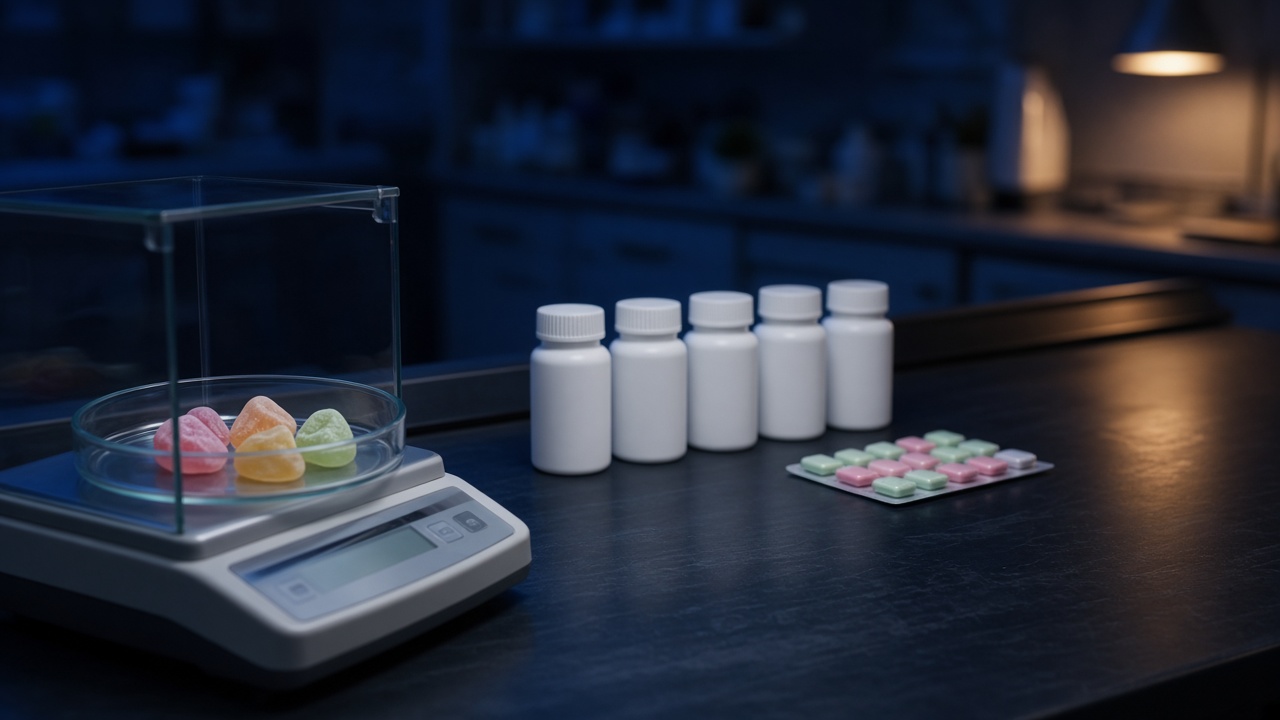
Call it the unlabeled dose
Start with the bottle. In 2023, a team led by Pieter Cohen bought gummies from 30 brands listed in a National Institutes of Health supplement database and sent them to a lab. Five dropped out, four because they could not be bought and one because melatonin was not on the actual label, which left 25 products.²
Twenty two of the 25 were inaccurately labeled. Only 3 landed within 10% of the amount printed on the front. Across the products that contained melatonin, the real amount ran from 74% to 347% of the label, with measured doses between 1.3 and 13.1 milligrams per serving. One product had no detectable melatonin at all and 31.3 milligrams of CBD instead.²
In that 2023 test, 22 of 25 melatonin gummies had the wrong amount of melatonin on the label.
The study was small, and the lab tested a single bottle of each product, so another batch might have come out differently.² It is also not only an American problem. The authors point to a Canadian analysis of 16 brands in which the actual dose ran from 17% to 478% of the label.² In Australia, where melatonin is a prescription medicine for most adults, the national regulator tested 18 imported products intercepted at the border in 2025 and found that 12 had an average melatonin content well off the label, five of them by more than 50%.³ One product held more than 400% of its labeled amount. Another held none.³
The number on the front of the bottle is closer to a mood than a measurement.
Then comes the question of what the right amount even is. Researchers have found that as little as 0.1 to 0.3 milligrams can raise melatonin in the blood of young adults into the normal nighttime range.² The gummies in that test went up to 13.1. That is more than forty times the top of that range.
The people most exposed to the guesswork are children. Between 2012 and 2021, melatonin ingestions among Americans aged 19 and under reported to poison centers rose 530%, from 8,337 a year to 52,563. By 2021 they made up 4.9% of all pediatric ingestions reported, up from 0.6% in 2012. In the CDC's count, five children needed mechanical ventilation and two died.¹ Most of the increase came from unintentional ingestions by children aged five and under, meaning a bottle opened by accident.¹

Call it the clock dose
Here is the part I wish the label said out loud. Melatonin is not your body's sedative. Your brain releases it in the evening, in dim light, as a signal that biological night has begun. I think of it as the clock dose: a small message to your body clock about what time it is, not a hand over your eyes.
The best test of that idea is what happens when you change the dose. In 2001, MIT researchers gave 15 adults over 50 who slept poorly 0.1, 0.3 or 3.0 milligrams for a week each. The 0.3 milligram dose restored their sleep efficiency and brought their melatonin back to a normal nighttime level. The 3.0 milligram dose also improved sleep, but it left melatonin elevated into the daylight hours and lowered body temperature.⁴
A 2010 study asked the same question of the body clock itself. In 34 people, 0.5 milligrams and 3.0 milligrams both moved the clock by a similar amount, about an hour and a half at most over three days. What changed the result was when the dose was taken. The 0.5 milligram dose pulled the clock earlier when taken two to four hours before the body's own melatonin starts to rise in dim light, and the biggest delay came soon after waking.⁵ By the researchers' own conversion, that is nine to eleven hours before the middle of sleep, which works out to late afternoon for someone who sleeps from 11 at night to 7 in the morning.⁵
Melatonin is a timing signal, and it depends as much on when you take it as on how much.
Sleep medicine already works this way. The American Academy of Sleep Medicine's circadian practice parameters rate properly timed melatonin as a standard treatment for jet lag, the strongest level they use, and recommend it for delayed sleep phase, where afternoon or evening doses move the body clock earlier. For delayed sleep phase, the effective times in the studies behind that advice ranged from 1.5 to 6 hours before habitual bedtime.⁶
For ordinary insomnia the picture flips. The same academy's 2017 guideline suggests that clinicians not use melatonin for trouble falling asleep or staying asleep in adults.⁷ A pooled analysis of trials found that melatonin shortened the time to fall asleep by about 7 minutes in people with insomnia, against about 39 minutes in people with delayed sleep phase, though that second number came from just two trials.⁸
Seven minutes is roughly how long it takes to decide whether to take a second one.
Where I have to argue with myself
I should be careful, because the case against the nightly gummy is weaker than my headline.
The academy's recommendation against melatonin for insomnia is labeled weak, and the guideline itself says weak should not be read as ineffective. It says the strength of its recommendations speaks as much to the limits of the data as to the balance of benefits and risks.⁷ Plenty of people feel better on melatonin, and I would not tell any of them they are imagining it.
Then there is the study that frightened a lot of people last November. At the American Heart Association's 2025 meeting, researchers presented records for 130,828 adults with insomnia. They matched 65,414 who had been prescribed melatonin and taken it for at least a year with 65,414 who never had. Over five years, 4.6% of the melatonin users were diagnosed with heart failure against 2.7% of the others. Hospitalization for heart failure was recorded for 19.0% against 6.6%, and death from any cause for 7.8% against 4.3%.⁹
I read that with one eyebrow up. It is an observational abstract, not a peer reviewed paper, and the American Heart Association's own release says it cannot prove cause and effect.⁹ More people were recorded with a heart failure hospitalization than with a new heart failure diagnosis, which suggests the coding is messy. My own guess, and it is only a guess, is that people who still need a sleep aid after a year may simply be the people with the most troubled sleep, and chronic insomnia is already associated with cardiovascular disease.⁷
That is a reason to demand a randomized trial. It is not a reason to panic. It is a fair reason to stop calling something harmless just because it is sold next to the gum.
What the label should say
If I could print one line on the bottle, it would be a time of day. A sliver of melatonin hours before bed, taken in the dim light you would want anyway, is a conversation with your clock. Whatever the gummy happens to contain, swallowed at midnight because you are staring at the ceiling, is mostly a gamble.
Here is my bet. The gummy won't disappear, because candy was always the business. But the next round of independent testing will keep finding the wrong amounts, more countries will follow Australia in keeping melatonin behind a pharmacy counter, and the products that survive will print a time of day next to the milligrams. A brand that can't tell you how much is in the bottle won't be able to tell you when to take it either.
FAQ
What does melatonin actually do? Melatonin is a hormone your brain releases in the evening, in dim light, and it helps regulate the sleep wake cycle. As a supplement it works mainly by shifting the timing of your body clock rather than by sedating you, and studies of that effect used doses as low as 0.3 to 0.5 milligrams.
Does melatonin help with insomnia? Only weakly. The American Academy of Sleep Medicine's 2017 guideline suggests clinicians not use it for trouble falling or staying asleep in adults, and a pooled analysis found it shortened the time to fall asleep by about 7 minutes in insomnia. It works better, when timed correctly, for jet lag and delayed sleep phase.
When should I take melatonin? It depends on the goal, so ask a doctor or pharmacist. In studies of delayed sleep phase, effective doses were taken between 1.5 and 6 hours before habitual bedtime, and a 2010 study found that doses taken hours before bed moved the clock earlier while doses soon after waking pushed it later.
Are melatonin gummies safe for children? Melatonin ingestions among Americans aged 19 and under reported to poison centers rose 530% from 2012 to 2021, driven largely by accidental ingestions in children aged five and under. Because label doses are often wrong, give melatonin to a child only under a pediatrician's guidance and store it like any medicine.
Does melatonin cause heart failure? Nobody knows yet. A 2025 observational abstract linked taking melatonin for a year or more with higher rates of heart failure, hospitalization and death in people with insomnia, but it cannot prove cause and effect and has not been confirmed by a randomized trial.
Why are melatonin labels so often wrong? In the United States, melatonin products are not approved by the FDA and are sold over the counter as dietary supplements. In a 2023 test of 25 gummy products, 22 contained a different amount of melatonin than the label said.
This essay is general information, not medical advice. Talk to a doctor or pharmacist before starting, changing or stopping melatonin, and before giving it to a child.
Footnotes
¹ Lelak et al., "Pediatric Melatonin Ingestions, United States, 2012 to 2021," Morbidity and Mortality Weekly Report 71(22), CDC, 3 June 2022. Source for the sales figures ($285 million in 2016, $821 million in 2020), the 530% rise from 8,337 to 52,563 ingestions, the 4.9% and 0.6% shares, the five ventilated children and two deaths, and the rise driven by unintentional ingestions in children aged five and under. Ingestions are reports to US poison centers for people aged 19 and under.
² Cohen, Avula, Wang, Katragunta and Khan, "Quantity of Melatonin and CBD in Melatonin Gummies Sold in the US," JAMA, 25 April 2023. Source for the 25 products, 22 inaccurately labeled, 74% to 347% of label, 1.3 to 13.1 mg, the CBD product, the Canadian analysis of 16 brands (17% to 478%), the 0.1 to 0.3 mg nighttime range and the small sample. The single bottle per product detail is from The New York Times report on the study, 25 April 2023.
³ Therapeutic Goods Administration (Australia), "Imported melatonin samples: summary report" (testing 22 January to 9 September 2025) and the safety advisory "Safety concerns over imported melatonin products" (updated 29 January 2026). 12 of 18 samples with average content well off the label, five by more than 50%, one above 400% and one with none, and melatonin as a prescription medicine for most adults.
⁴ Zhdanova, Wurtman et al., "Melatonin Treatment for Age Related Insomnia," Journal of Clinical Endocrinology and Metabolism 86(10), 4727 (2001). 15 insomniac subjects over 50 and 15 normal sleepers, doses of 0.1, 0.3 and 3.0 mg for a week each, with sleep measured by polysomnography.
⁵ Burgess et al., "Human Phase Response Curves to Three Days of Daily Melatonin: 0.5 mg Versus 3.0 mg," Journal of Clinical Endocrinology and Metabolism 95(7), 3325 (2010). 34 participants. The nine to eleven hours before the midpoint of sleep is the study's own conversion of the two to four hours before dim light melatonin onset.
⁶ Morgenthaler et al., "Practice Parameters for the Clinical Evaluation and Treatment of Circadian Rhythm Sleep Disorders," SLEEP 30(11), 1445 to 1459 (2007), American Academy of Sleep Medicine. Jet lag (Standard) and delayed sleep phase (Guideline). The academy marked the intrinsic disorder sections as updated in 2015, the jet lag recommendation as still current.
⁷ Sateia et al., "Clinical Practice Guideline for the Pharmacologic Treatment of Chronic Insomnia in Adults," Journal of Clinical Sleep Medicine 13(2), 307 to 349 (2017). Recommendation 12 (weak) against melatonin for sleep onset or sleep maintenance insomnia, the statement on what a weak recommendation means, and the association of chronic insomnia with cardiovascular disease.
⁸ Buscemi et al., "The Efficacy and Safety of Exogenous Melatonin for Primary Sleep Disorders: A Meta Analysis," Journal of General Internal Medicine (2005). Weighted mean difference in sleep onset latency of 7.2 minutes in insomnia (12 studies) and 38.8 minutes in delayed sleep phase (2 studies).
⁹ Nnadi et al., "Effect of Long term Melatonin Supplementation on Incidence of Heart Failure in Patients with Insomnia," abstract presented at the American Heart Association Scientific Sessions, November 2025, Circulation 152 (Suppl 3), Abstract 4371606. TriNetX records, hazard ratio 1.89 for incident heart failure. The statement that it cannot prove cause and effect is from the American Heart Association news release.
Sources
- CDC MMWR: https://www.cdc.gov/mmwr/volumes/71/wr/mm7122a1.htm
- JAMA (Cohen et al. 2023): https://jamanetwork.com/journals/jama/fullarticle/2804077 and The New York Times: https://www.nytimes.com/2023/04/25/well/live/melatonin-gummies-mislabeled-sleep.html
- TGA summary report: https://www.tga.gov.au/resources/publication/tga-laboratory-testing-reports/imported-melatonin-samples-summary-report and TGA safety advisory: https://www.tga.gov.au/safety/safety-monitoring-and-information/safety-alerts/safety-concerns-over-imported-melatonin-products
- Journal of Clinical Endocrinology and Metabolism (Zhdanova et al. 2001): https://academic.oup.com/jcem/article/86/10/4727/2864847
- Journal of Clinical Endocrinology and Metabolism (Burgess et al. 2010): https://pmc.ncbi.nlm.nih.gov/articles/PMC2928909/
- SLEEP (Morgenthaler et al. 2007): https://aasm.org/wp-content/uploads/2017/07/PP_CircadianRhythm.pdf
- Journal of Clinical Sleep Medicine (Sateia et al. 2017): https://pmc.ncbi.nlm.nih.gov/articles/PMC5263087/
- Journal of General Internal Medicine (Buscemi et al. 2005): https://pmc.ncbi.nlm.nih.gov/articles/PMC1490287/
- Circulation abstract (Nnadi et al. 2025): https://www.ahajournals.org/doi/10.1161/circ.152.suppl_3.4371606 and American Heart Association news release: https://ebs.publicnow.com/view/402CEB0E1A17475C37E505EBD2AF67C289678266